

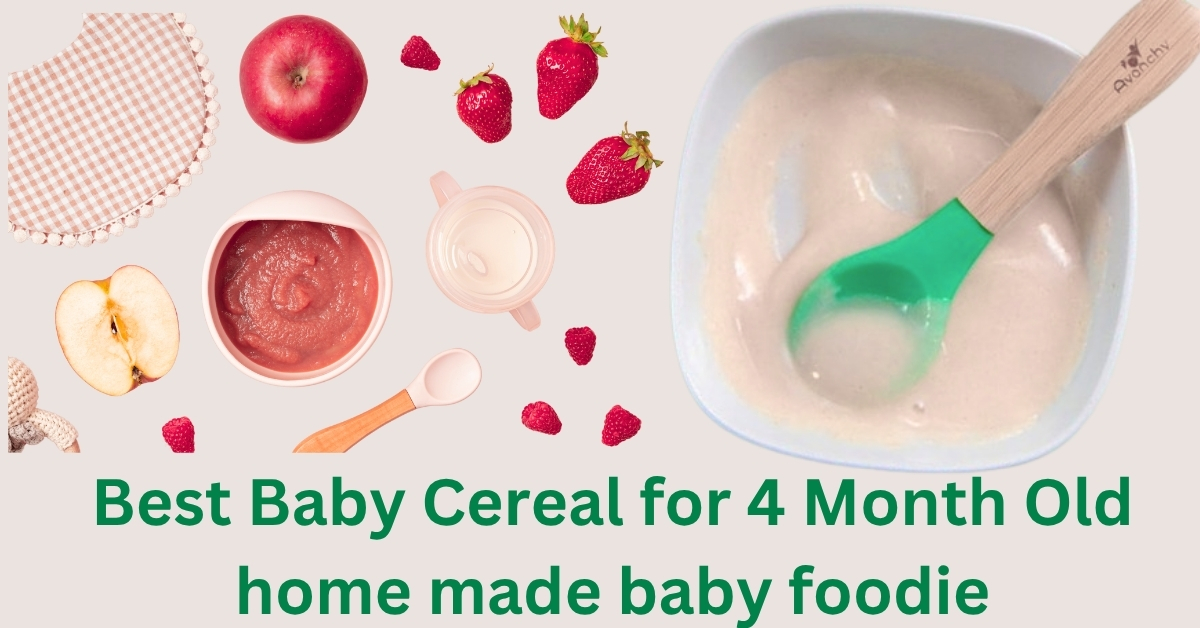
Your baby is growing fast. Around 4 months, many parents start thinking about baby cereal.
It is one of the first solid foods babies try.
But it is very important to start slowly and safely.
At 4 months, your baby’s tummy is still small and soft.
The main food should still be breast milk or formula milk.
Cereal is just a small new taste — not a full meal.
So, what is the best baby cereal for a 4-month-old?
What type is safe?
And how can you feed it correctly?
In this guide, you will learn:
- When to start baby cereal
- What kind of cereal is good for 4-month-old babies
- How to prepare it safely
- Which brands are trusted by parents
This is a complete and easy guide for new parents who want to feed their baby with care and love.
Is It Safe to Give the Best Baby Cereal for 4 Month Old Babies?
Every baby is different.
Some are ready for solid food around 4 months, others around 6 months.
You should always talk to your pediatrician before starting.
Doctors say:
Breast milk or formula gives all the nutrients your baby needs for the first 4–6 months.
Solid food is only a practice, not a replacement.
Signs Your Baby Might Be Ready:
- Can hold head up without help.
- Opens mouth when food comes near.
- Tries to grab your food.
- Doesn’t push food out with tongue.
If your baby does these things, you can try a small spoon of baby cereal once a day.
Why Choose Baby Cereal as First Food
Baby cereal is one of the easiest and safest first foods.
It has a soft texture and mild taste.
It also helps babies learn how to eat from a spoon.
Benefits of Baby Cereal:
- Easy to digest: Soft and light for baby’s tummy.
- Iron-fortified: Most cereals have added iron, which is important for growth.
- Less chance of allergy: Simple grains are usually safe for babies.
- Helps baby feel full: Keeps baby satisfied for longer.
When you start with cereal, use plain single-grain cereal.
Do not add sugar, salt, or honey.
Babies need only the natural taste.
Best Types of Baby Cereal for 4 Month Old
There are a few types of baby cereal you can start with.
Each one has its own benefits.
Rice Cereal
Rice cereal is the most common first baby food.
It is soft, smooth, and easy to digest.
It rarely causes allergies.
Benefits:
- Gentle on baby’s stomach.
- Has iron and vitamins.
- Can mix easily with breast milk or formula.
Tip: Choose organic rice cereal without added sugar or flavor.
Oatmeal Cereal
Oatmeal cereal is another great choice.
It has more fiber than rice cereal and helps prevent constipation.
Benefits:
- Rich in nutrients like calcium and iron.
- Helps in smooth digestion.
- Has a mild, natural flavor babies enjoy.
Tip: Mix oatmeal cereal with warm formula milk for a creamy texture.
Barley Cereal
Barley cereal is full of vitamins and minerals.
It has a smooth texture that is good for little babies.
Benefits:
- Great for babies who are slightly older (4–5 months).
- Helps build strong bones and muscles.
- Adds variety to your baby’s meals.
Tip: Always start with single-grain cereal before mixing with other grains.
Multigrain Cereal
After your baby gets used to single-grain foods (like rice or oats), you can try multigrain cereal.
It mixes different grains like rice, oats, wheat, and corn.
Benefits:
- More flavor and nutrition.
- Gives extra energy for growing babies.
- Can be used around 5–6 months after baby adjusts.
Note: Always introduce new foods one by one to check for any allergy.
Why Choose the Best Baby Cereal as Your Baby’s First Food
Making baby cereal is very simple.
You just need a few minutes and some love
Step 1: Choose Your Cereal
Pick a single-grain cereal (rice or oatmeal).
Make sure it’s iron-fortified and organic.
Step 2: Mix with Liquid
Take 1 tablespoon of cereal in a bowl.
Add 4–5 tablespoons of breast milk or formula.
Mix well until smooth and thin.
Step 3: Feed Slowly
Use a soft baby spoon.
Let your baby taste only 1–2 spoons at first.
If baby enjoys it, you can give a little more.
Step 4: Avoid Mixing in Bottle
Always feed with a spoon, not in a bottle.
It helps baby learn how to eat properly.
Best Baby Cereal Brands for 4-Month-Old Babies
When choosing baby cereal, always look for trusted brands.
Pick those that use organic ingredients, no sugar, and no preservatives.
Here are some of the best baby cereal brands that parents love.
Gerber Baby Cereal
Gerber is one of the most popular brands for baby food.
Their single-grain rice and oatmeal cereals are perfect for 4-month-old babies.
Why Parents Like It:
- Fortified with iron and vitamins.
- Soft and easy to mix.
- Gentle on baby’s stomach.
- Available in many varieties.
Tip: Try Gerber Organic Oatmeal for a natural and safe option.
Earth’s Best Organic Baby Cereal
This brand is made with organic whole grains.
It’s a great choice for parents who want a natural and chemical-free option.
Why Parents Like It:
- USDA certified organic.
- No artificial colors or flavors.
- High in fiber and iron.
- Smooth texture for easy feeding.
Tip: Their Organic Whole Grain Rice Cereal is very soft and perfect for early feeding.
Happy Baby Organics
Happy Baby is known for clean ingredients and healthy blends.
Their baby cereals are rich in nutrients and probiotics that support digestion.
Why Parents Like It:
- Contains choline and iron.
- Helps support brain and eye development.
- Gluten-free and organic.
Tip: Their Oatmeal Baby Cereal with Choline is perfect for babies just starting solids.
Beech-Nut Baby Cereal
Beech-Nut offers a variety of baby cereals made from natural grains.
Their products are simple, clean, and gentle for tiny tummies.
Why Parents Like It:
- No added sweeteners or salt.
- Non-GMO and made with care.
- Comes in single-grain and multigrain options.
Tip: Choose Beech-Nut Single Grain Rice Cereal for babies under 5 months.
Heinz Baby Cereal
Heinz is trusted in many countries for baby food.
Their cereals are creamy and rich in vitamins and minerals.
Why Parents Like It:
- Easy to prepare with milk or water.
- Soft and smooth texture.
- Supports healthy growth and weight gain.
Homemade vs Store-Bought Baby Cereal
Many parents wonder — should I make baby cereal at home or buy from store?
Both options are good, but let’s compare them.
Homemade Baby Cereal
Pros:
- 100% natural and fresh.
- No added sugar, salt, or chemicals.
- You can use organic rice or oats.
- Cheaper than store brands.
Cons:
- Takes time to prepare.
- Must be stored carefully.
- Harder to make sure it has enough iron and vitamins.
How to Make Simple Rice Cereal:
- Take 2 tablespoons of organic rice.
- Wash well and dry.
- Grind into fine powder.
- Cook with water until soft and smooth.
- Mix with breast milk or formula before feeding.
Store-Bought Baby Cereal
Pros:
- Quick and easy to prepare.
- Fortified with iron, zinc, and vitamins.
- Comes in many flavors and textures.
- Safe and tested for babies.
Cons:
- Some brands may have added sugar.
- More expensive.
If you buy from a store, always check the ingredient label.
Choose cereals that are organic, non-GMO, and iron-fortified.
Feeding Tips for 4-Month-Old Babies
When feeding cereal to a 4-month-old, go slow and gentle.
Your baby is just learning how to eat.
Tips to Remember:
- Start small:
Begin with 1–2 spoons of cereal once a day. - Mix with milk:
Use breast milk or formula milk to make it smooth and thin. - Use a soft spoon:
A silicone baby spoon is best for your baby’s gums. - Watch for allergies:
If baby gets rash, vomiting, or diarrhea, stop and call your doctor. - Keep baby upright:
Sit baby straight during feeding to prevent choking. - Feed with patience:
Some babies may reject cereal at first.
It’s okay — try again another day. - Clean and safe:
Always use clean bowls, spoons, and water.
When to Increase the Amount
After 1–2 weeks, if your baby likes cereal and swallows well, you can slowly increase.
Move from 1 spoon to 3–4 spoons each meal.
Feed once or twice a day depending on baby’s hunger.
Still, breast milk or formula must be the main food until 6 months.
Cereal is just for practice and taste.
Safety Precautions Before Feeding Baby Cereal
When feeding your 4-month-old baby, safety comes first.
Their body and digestion are still very soft and developing.
A few small steps can keep your baby safe and happy during every meal.
Important Safety Rules:
- Ask your pediatrician first
- Always take advice from your doctor before starting cereal.
- Every baby grows differently. Some are ready at 4 months, others at 6 months.
- Use single-grain cereals
- Start with rice cereal or oatmeal cereal only.
- This helps you see if your baby has any food allergy.
- No sugar or salt
- Babies don’t need extra flavor.
- Sugar or salt can harm your baby’s kidneys and teeth later.
- Never feed cereal in a bottle
- Always use a spoon.
- Feeding from a bottle can cause choking or overfeeding.
- Keep the food fresh
- Prepare small portions only.
- Throw away leftovers after feeding.
- Check the temperature
- Baby cereal should be warm, not hot.
- Test a small drop on your wrist before feeding.
Common Mistakes Parents Should Avoid
New parents sometimes make small mistakes while introducing cereal.
Knowing these early will help you feed your baby the right way.
Mistake 1: Feeding too early
Some parents start before 4 months.
This can cause tummy problems or even food allergies.
Always wait until your baby shows signs of readiness.
Mistake 2: Making cereal too thick
A 4-month-old baby needs thin, smooth cereal.
Thick food can cause choking or digestive pain. Mistake 3: Adding sugar, honey, or salt
Avoid adding anything sweet or salty.
Even a little bit can harm your baby’s health.
Mistake 4: Ignoring baby’s reaction
If your baby refuses food or cries, stop.
Maybe the baby is full or not ready.
Try again another day — patience is key.
Mistake 5: Feeding when baby is sleepy
Always feed when your baby is awake and alert.
Feeding during sleep can cause choking.
Expert Advice for First-Time Parents
Doctors and nutrition experts share a few golden tips for first-time parents.
These help you make baby feeding safe, simple, and full of love.
Doctor’s Tips:
- Wait for baby’s signs — not the calendar.
- Begin with 1–2 teaspoons daily.
- Use iron-fortified cereal for healthy brain growth.
- Offer new foods slowly, one at a time.
- Watch for allergies — like rashes or vomiting.
If you notice any reaction, stop the food and talk to your doctor.
Parenting Tips:
- Keep mealtime happy and relaxed.
- Smile and talk softly while feeding.
- Sit your baby upright in a high chair.
- Always clean baby’s mouth after feeding.
- Enjoy this time — it’s a big milestone for your baby!
How to Know If Baby Likes the Cereal
Every baby is unique. Some will love cereal from the first spoon, others will need time.
Watch for These Signs of Enjoyment:
- Baby opens mouth for the spoon.
- Baby swallows easily.
- Smiles or waves arms during feeding.
- No tummy upset after eating.
If baby spits it out or turns away, don’t worry.
Try again after 2–3 days.
Babies learn slowly, and that’s perfectly okay.
When to Try Other Foods
After a few weeks of cereal, your baby may be ready for other soft foods.
But do it slowly and one food at a time.
Safe Next Foods After Cereal:
- Mashed banana
- Soft avocado
- Cooked sweet potato
- Pureed apple or pear
- Mashed pumpkin
Always start with a very small amount.
If no allergy appears, you can keep giving it.
Final Thoughts: A Loving Start to Your Baby’s Food Journey
Your baby’s first cereal is more than just food — it’s a beautiful beginning.
It teaches your baby how to eat, taste, and enjoy meals.
Remember:
- Always start slow and safe.
- Choose organic, iron-fortified baby cereal.
- Feed with patience and love.
- Never rush. Every baby learns at their own pace.
You are doing an amazing job!
Feeding time is not only about food — it’s about bonding, smiles, and trust.
So take your time, enjoy the little moments, and watch your baby grow healthy and strong.